

Mudroom Design Ideas for Family Homes in Connecticut
The mudroom is the most honest room in any home. It sees everything: wet boots, school bags, dog leashes, last-minute coat grabs. For most families in Fairfield County, it's also where everyone actually enters the house, not through the front door, but through the side door off the garage. The mudroom connects the outside world to the kitchen and the rhythm of daily life.
Getting mudroom design ideas right matters more than it might seem. A well-designed mudroom reduces friction in the morning, keeps the rest of the house cleaner, and, when done thoughtfully, becomes a space that feels intentional rather than merely functional. Here are ten ideas we return to across our full-service interior design projects at Ginger Lemon Indigo.
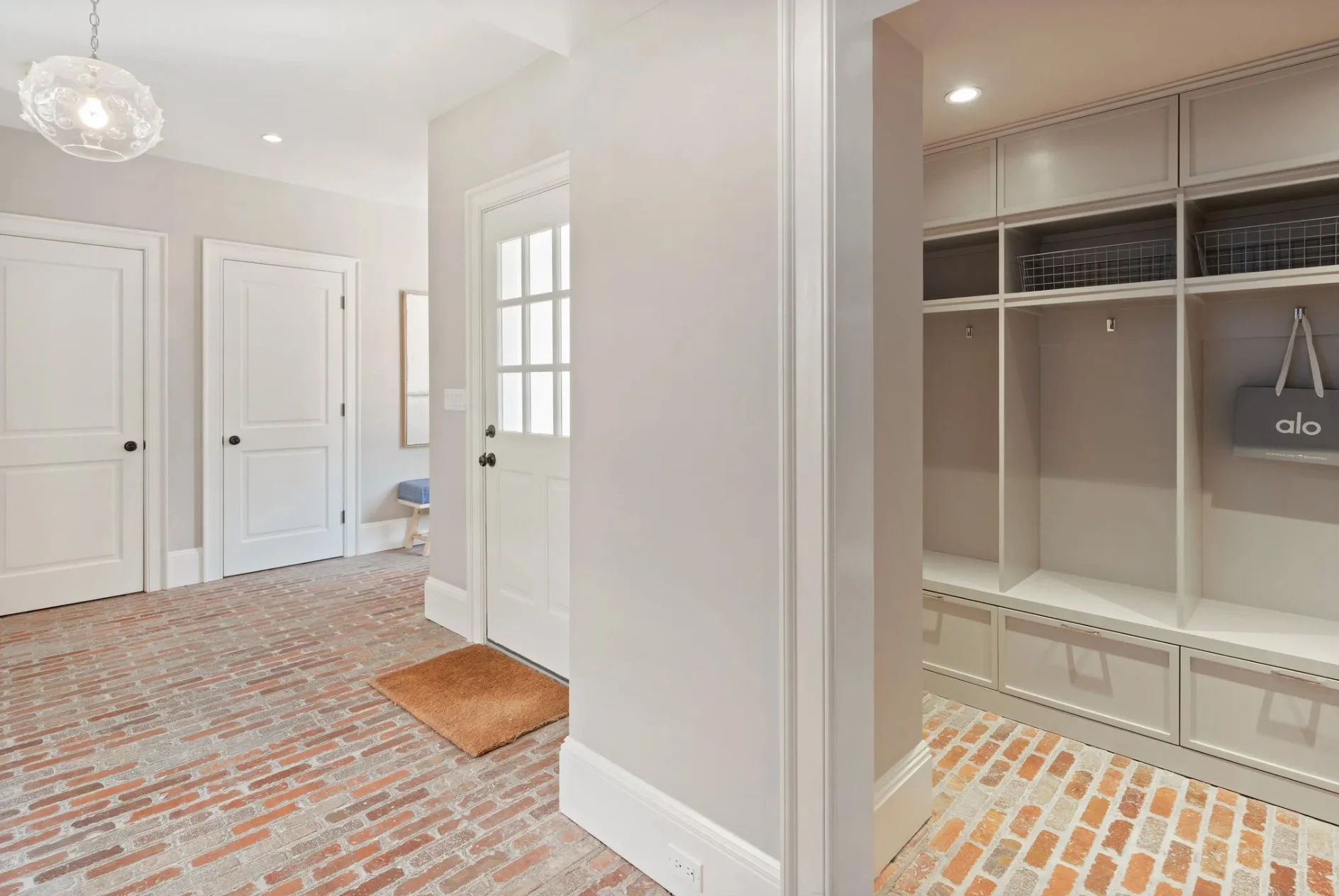
What a Mudroom Actually Needs to Do
A mudroom that works starts with a clear understanding of the household using it. How many people? What ages? Pets? Sports gear? The answers shape every decision that follows.
At minimum, a well-functioning mudroom needs three things: a place to drop coats and bags, a place to sit and deal with shoes, and a place to store things out of sight. In the Northeast — with its wet winters, salt-tracked floors, and layered outerwear — the mudroom has to absorb a remarkable amount of daily chaos without showing it.
The best mudroom layouts for families balance open storage (for things grabbed and dropped every day) with concealed storage (for seasonal items, overflow, and the visual calm that makes the space feel designed, not merely practical).
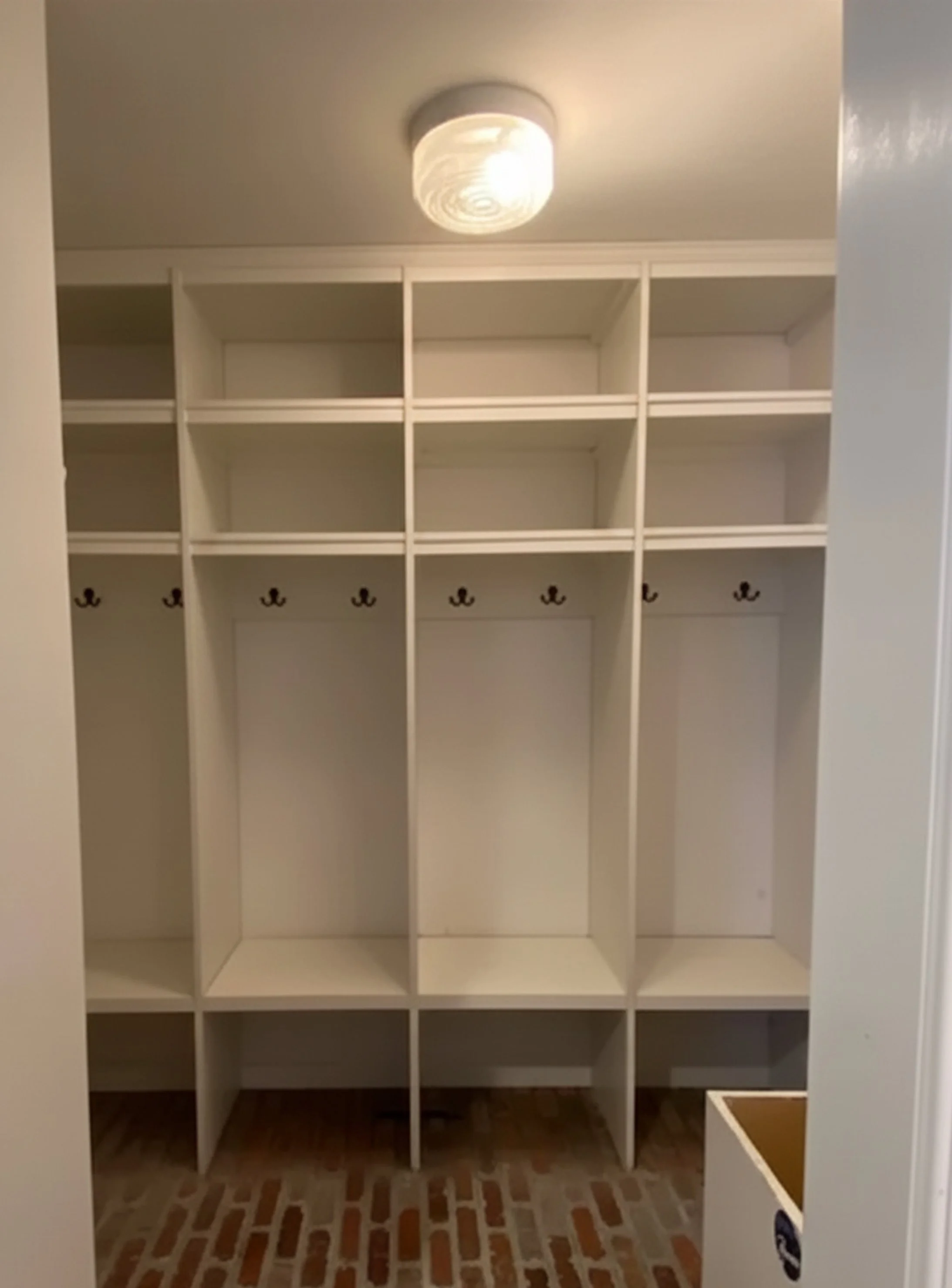
Before: Empty cubbies, no storage below and a single ceiling light
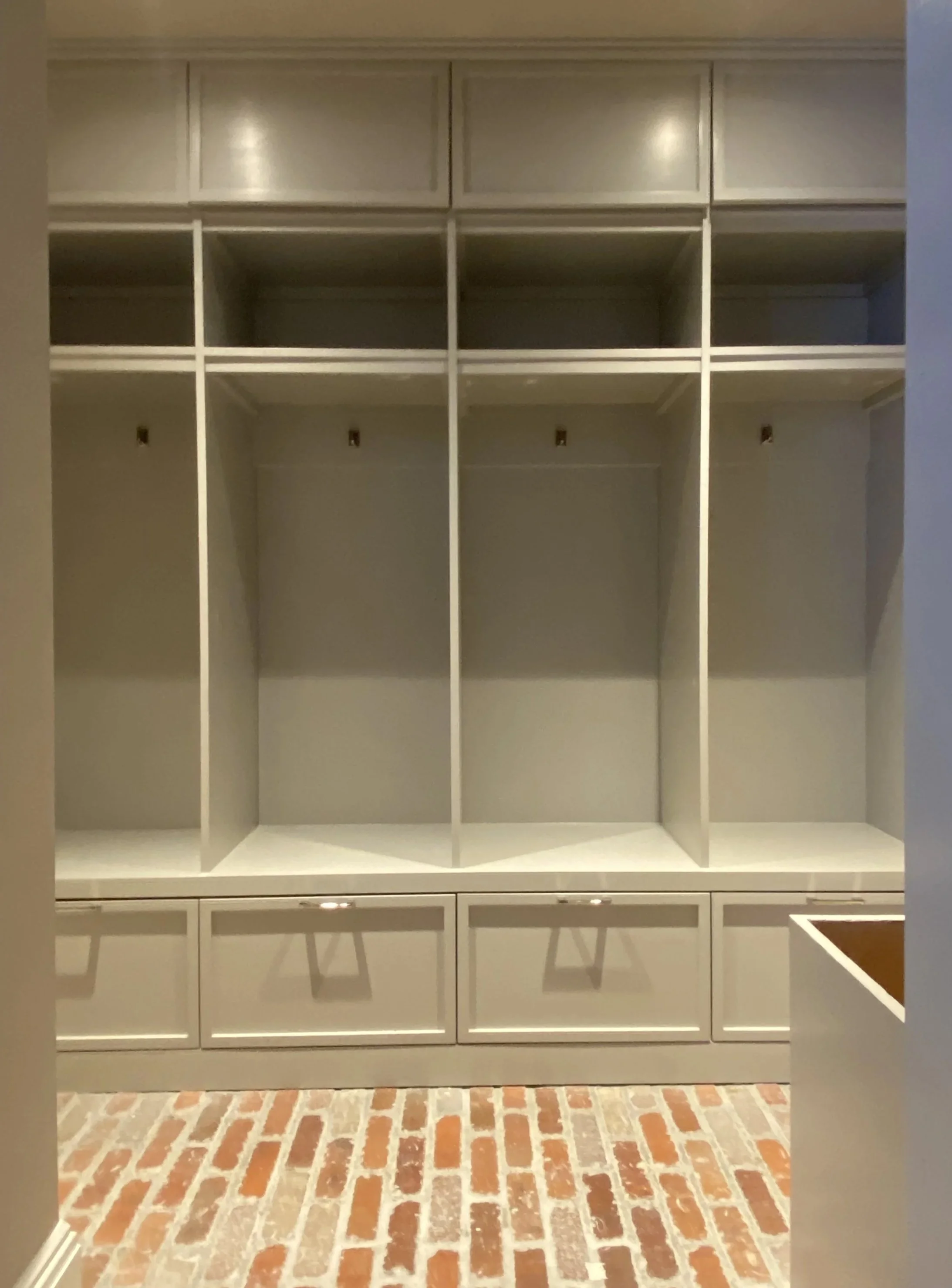
After: Unified paint, drawers below the bench and recessed lighting overhead
Ten Mudroom Design Ideas for Connecticut Family Homes
1. Pull-Out Drawers Beneath the Bench
Keep shoes off the floor and within reach. In a Darien period farmhouse we worked on, pull-out drawers for children's shoes meant the floor stayed clear — the routine became automatic.
2. Overhead Lift-Up Cabinets for Seasonal Storage
Ski helmets, extra gloves, sleds, and out-of-season gear belong overhead. Lift-up cabinet doors open upward rather than swinging out into a narrow space, making them the practical choice when storage runs floor to ceiling. Custom mudroom storage that uses the full height of the room is almost always worth the investment.
3. A Bench With Storage Underneath
A mudroom bench with storage underneath earns its place in every project. The specifics matter: bench height, drawer depth, the quality of the hardware. In the Darien project, hardware throughout is from RH — a considered choice for a working space that still needed to feel finished.
4. Assign a Zone to Each Person
Individual cubbies or hooks reduce the friction of shared space and make it easier for children to manage their own things. One hook, one cubby, one drawer per person. The system only works if it's obvious.
5. Keep Daily Items Accessible, Seasonal Items Concealed
What's used every day should be reachable without opening a cabinet. What's used twice a year can be stored overhead. This single principle, applied consistently, is what keeps a mudroom from reverting to chaos within a week.
6. A Lower Hook Rail at Kid Height
For families with young children, a hook rail at kid height makes an immediate difference. It gives children ownership of their own space. Simple, and almost always overlooked.
7. Design for the Mess, Not Against It
Wipeable surfaces, darker or patterned flooring, durable hardware — these details let the mudroom absorb real life without looking like it. The goal is a space that contains the chaos without showing it.
8. Replace a Bulky Ceiling Fixture With Recessed Lighting
Lighting is often the last thing considered in a mudroom, and it makes one of the largest differences. A single fixture in a narrow entry casts flat light and visually crowds the space. In the Darien project, two sleek recessed overheads replaced the original fixture. The result was immediately cleaner and more considered.
9. Paint Everything in One Unified Color
Walls, trim, and built-ins, all in the same Farrow & Ball muted gray throughout. The space stops reading as a collection of separate elements and starts reading as a whole.
10. A Sports Gear Station
A fixed place for kids to leave their sports gear when they come home; hockeysticks, tennis rackets, lacrosse sticks. This way nothing goes missing.
Mudroom Design Ideas for Connecticut Homes — A Starting Point
These ideas are only useful if they're grounded in the specific constraints and opportunities of the space you're working with. The right mudroom for a Darien Colonial is different from the right mudroom for a Westport coastal cottage or a Greenwich new build.
What stays consistent is the intention behind it: a space that absorbs the reality of daily life, makes the morning smoother, and still looks like it belongs to a considered home. Barbra Fordyce, an ASID Allied designer and founder of Ginger Lemon Indigo, trained at the New York School of Interior Design and works with homeowners across Fairfield County — including Darien, Westport, Greenwich, and New Canaan — to design spaces that function fully and feel genuinely personal. Read the feature in Darien Living, her approach centers on spaces that feel intuitive, practical, and tailored to the rhythm of everyday family life.
See how we approached the storage, lighting, and finishing details in the Darien Residence, or explore the Westport family room for another example of how we design for the way families actually live. If you're working through a mudroom renovation or a broader interior design project in Connecticut, we'd be glad to talk.